Time is a slippery kirnoofel.
Chloë and Max’s relationship is strained when they move in together and Chloë’s sleep paralysis appears to open a portal to another dimension.
an eight-episode
low-fi sci-fi (sorta) rom-com
audio drama

Starring
Tanja Milojevic as Chloë
Christopher Colón as Max
Erin B. Lillis as Being
Nate DuFort as David
Tatiana Grey as Elizabeth and
Boyd Barrett as your Narrator
Featuring the song “Voices”
Written and Performed by
Anne-Marie Choon
Theme Music by
Katharine Seaton
Written and Produced by
William J. Meyer

© William J. Meyer
Episode One //
The Weird Thing
Chloë endures an otherworldly visitation.
Transposition: Music
This form of transposition is the process of shifting musical notes down in pitch or up in pitch— shifting a melody, a progression, or an entire musical piece to another key. Some music transposition is written. Other times, at sight. In this case, music is read in one key, but played in another.

Annotation A:
Sonder
The realization that each random passerby is living a life as vivid and complex as your own
A word coined by writer John Koenig >>
Annotation B:
Would the existence of time travel negate the concept of Free Will?
If you could travel back in time and alter someone’s decision, and thus re-determine the future, would this also successfully eliminate their Free Will?
PBS Space Time asks, “Can Free Will be Saved in a Deterministic Universe?” >>

Episode Two //
A Wholesome Deception
Chloë cries for a living.
Transposition: Prestidgitation
This form of transposition is affiliated with stealing. Also related to close-up magic, prestidigitation is its own genre of entertainment and requires highly skilled dexterity involving body posture, trickster fingers, choreography, and psychology.

Annotation A:
Semantic satiation
A word’s temporary loss of meaning,
following its repetition
SciShow Psych asks, “Why Does a Word Sometimes Lose All Meaning?” >>
Annotation B:
The Description of a New World,
Called The Blazing-World
by Margaret Cavendish
The first science fiction novel
written by a woman
Anna Battigelli writes,
“Cavendish looks inward, freely exercising her subjective use of perspective over the worlds within her head.” >>
Episode Three //
Nightmare
Chloë conjectures her sleep paralysis might connect her to a dark spirit realm.
Transposition: Medical
This form of transposition is a displacement of an internal organ in the main cavities of the human body to an opposite side from its normal position. Example: a transposition of the heart.

Annotation A:
The Nightmare
by Henry Fuseli
Among many other works of literature, some say Fuseli's painting influenced Mary Shelley's Frankenstein and Edgar Allan Poe’s The Fall of the House of Usher
See this painting at the
Detroit Institute of Arts Museum >>
Annotation B:
The Sleep of Reason Produces Monsters
by Francisco Goya
Goya wrote a caption for this work saying, “Imagination abandoned by reason produces impossible monsters; united with her, she is the mother of the arts and source of their wonders.”
See and read more about this work
from The Met >>
Episode Four //
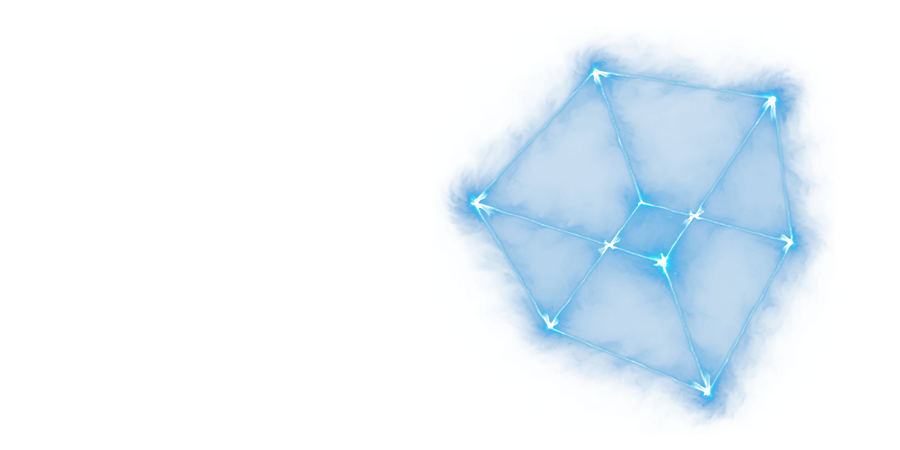
Limits of the Material Plane
A mysterious entity urges Chloë to crawl into an interstitial passageway and ascend to another plane of existence.
Transposition: Logic
This form of transposition involves a biconditional statement and refers to the relation between hypothetical propositions.
To transpose the terms of one proposition requires the conversion of the terms on both sides of the bicondition.
To transpose the terms of one proposition requires the conversion of the terms on both sides of the bicondition.

Annotation A:
Liminal spaces
An intermediate space occupying a threshold, a boundary of thought and experience made manifest, often a place of waiting
RAMCPU writes, “...those weird, atmospheric, and sometimes eerie places, that look like the gateway to another realm,” looking at art, information, and aesthetics for the online magazine sabukaru >>
Annotation B:
Interstitial spaces
A space within tissues, in-between cells,
filled with fluid
Odise Cenaj and colleagues conclude there is “evidence for continuity of interstitial spaces across tissue and organ boundaries in humans...” >>
Episode Five //
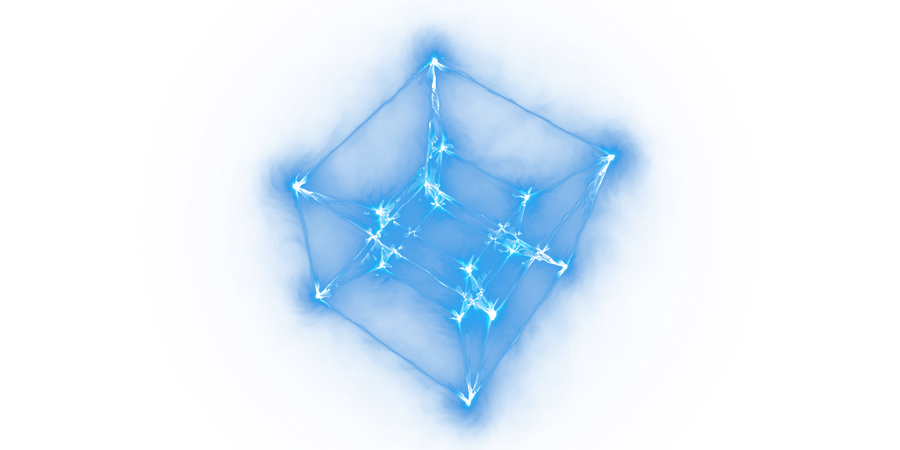
Hypercube
Chloë discovers her true nature.
Transposition: Mathematics
There are many forms of transpositions possible in mathematics…

Annotation A:
Tesseract
The four-dimensional analogue of the cube, can be unfolded into eight cubes in 3D space • Appears in popular culture, including Robert Heinlein’s short story,
“And He Built a Crooked House”
Watch the 1978 computer animation
The Hypercube: Projections and Slicing by Thomas Banchoff and Charles Strauss, winner of the Prix de la Recherche Fondamentale at the International Congress of Scientific Films in Brussels >>
Annotation B:
Stompers trucks
Four-wheel drive, battery-powered toy vehicles created by A. Eddy Goldfarb
Watch a Stomper commercial from 1984 >>
Episode Six //
The Place of Electric Thoughts
Chloë spends her last day on Earth indulging in her favorite things.
Transposition: Spatial
This form of transposition is an act, process, or instance of transferring a being or object from one place or location to another place or location.

Annotation A:
Zeno's dichotomy paradox
The paradox of cutting in two, and why you'll never get where you're going by dividing the remaining distance in half
Watch biophysicist Colm Kelleher explain how to resolve going nowhere fast >>
Annotation B:
Eidetic memory
The capacity to see an image in the mind’s eye with high precision as if the image is still present, different from recalling a past event • Typically found only in young children
Fire up those neurons and learn about the differences between eidetic memory
and photographic memory
as explained by BBC Reel >>
Episode Seven //
At the Uncanny Threshold
Chloë needs another brain to anchor the interstitial passageway and create a stable egress while regulating the pan-dimensional flux.
Transposition: Composition
This form of transposition is to change or transform in nature.

Annotation A:
Temporal contiguity
The occasion of two stimuli experienced close together in time, forming an association between them • One event's reoccurrence will evoke the memory of the other
Read about psychology's contiguity
priming and retrieval cues on
Wikipedia, The Free Encyclopedia >>
Annotation B:
Pizza
Yum
Listen as Mike Pollock explains the Secret History of Pizza >>
Episode Eight //
A Possible Paradoxum
In the final episode, trapped between contradictory possibilities, Chloë faces an unexpected enigma.
Transposition: ???

Annotation A:
Transpiration
The continuous evaporation of water from plants during photosynthesis • Water molecules evaporate from the surface of leaves, pulling on the adjacent water molecule, creating a continuous flow of water out through the plant
Watch this animated video from Free Animated Education which answers the question, “What is Transpiration in Plants?” >>
Annotation B:
Dissociation
Feeling disconnected from oneself, such as thoughts, feelings, memories, identity • Feeling detached from one's body as though the world was unreal • Often, a response to trauma
© William J. Meyer
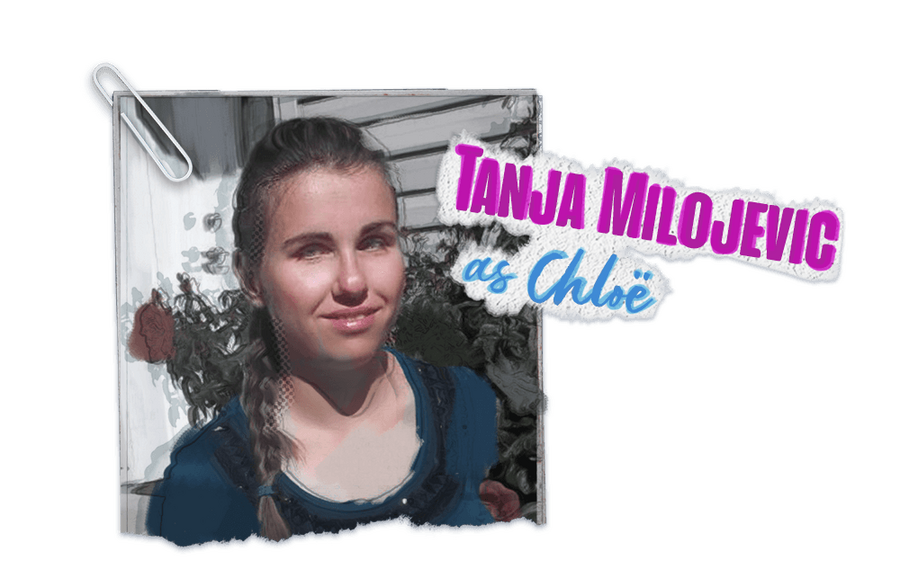
Tanja Milojevic has a Masters in Vision Rehab Therapy and lives in Boston, Massachusetts.
Tanja is a writer and producer at
LightningBolt Theater of the Mind.
Her vocal talents can be heard in a number of audio dramas including Edict Zero, Greater Boston, Vast Horizon, and All’s Fair.
Find more of Tanja’s work
on her website >>
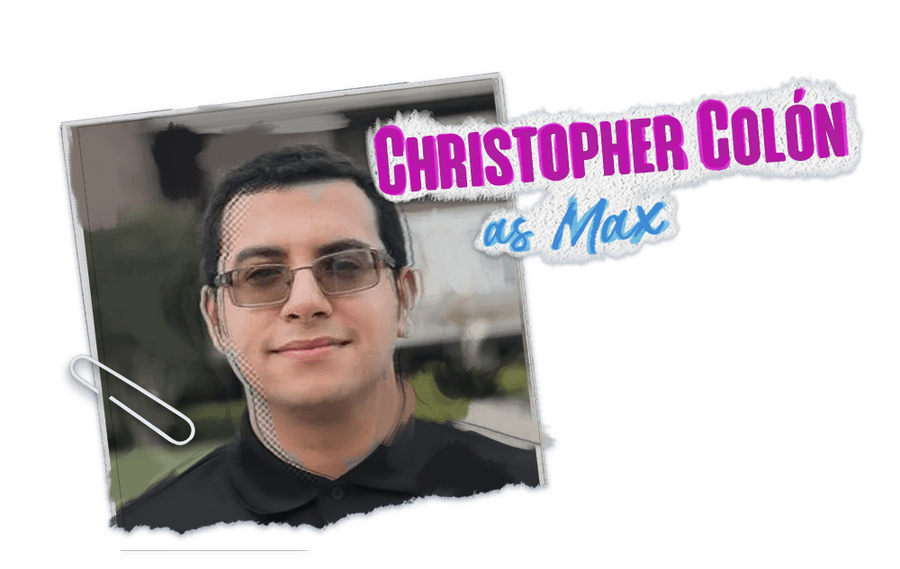
Christopher Colón is a Caribbean actor that lives in Orlando, Florida.
Christopher’s fascination with stories of all genres has lead him to voice acting where he’s appeared in such fiction podcasts as Kalila Stormfire’s Economical Magick Services, Prototype World of Tomorrow, and Epsilon.
Find more of Christopher’s work
on his website >>
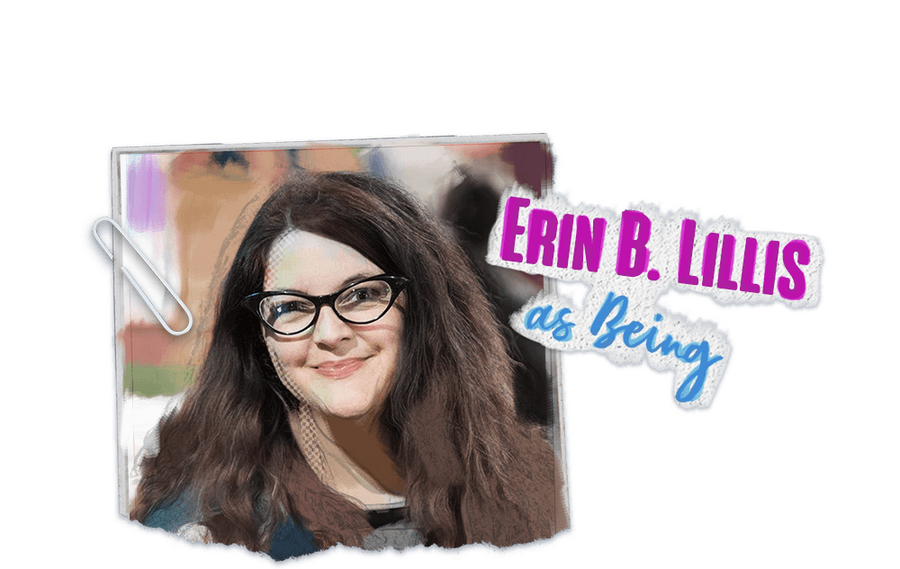
Erin B. Lillis is a voice actor living in Los Angeles, California.
Erin enjoys appearing in genre audio dramas and is known for her work on The NoSleep Podcast, Congeria, The Alexandria Archives, and more!
She produces, writes, voices, and sound designs the LGBTQIA-centric
SubverCity Transmit.
Find more of Erin’s work
on her website >>

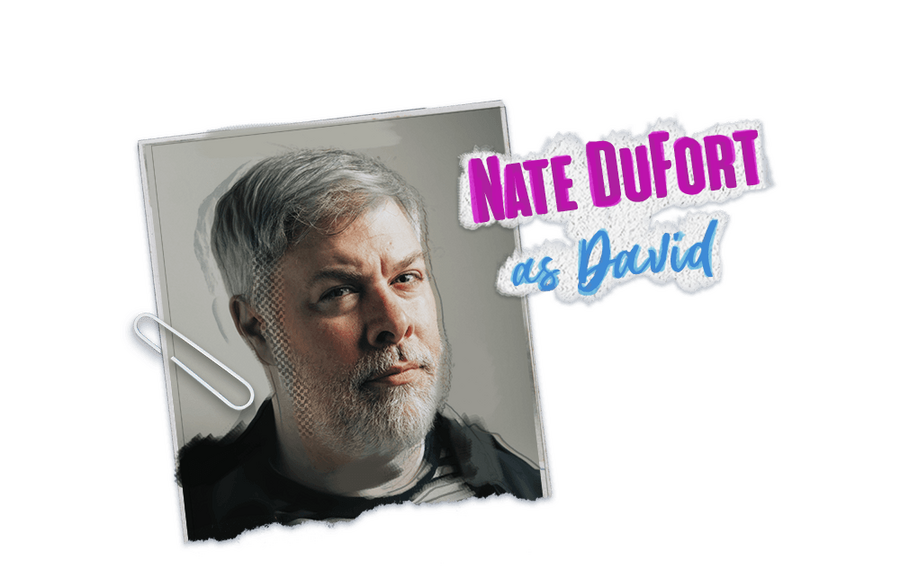
Nate DuFort is a writer, producer, and director splitting time between Detroit and Chicago.
Nate is the Founder and Executive Producer of the children's podcasting network Soundsington Media.
As a vocal performer he can be heard regularly on commercials as well as podcasts such as The Strange Case of Starship Iris, The Big Loop, and Maxine Miles.
Find more of Nate’s work
on his IMDb page >>

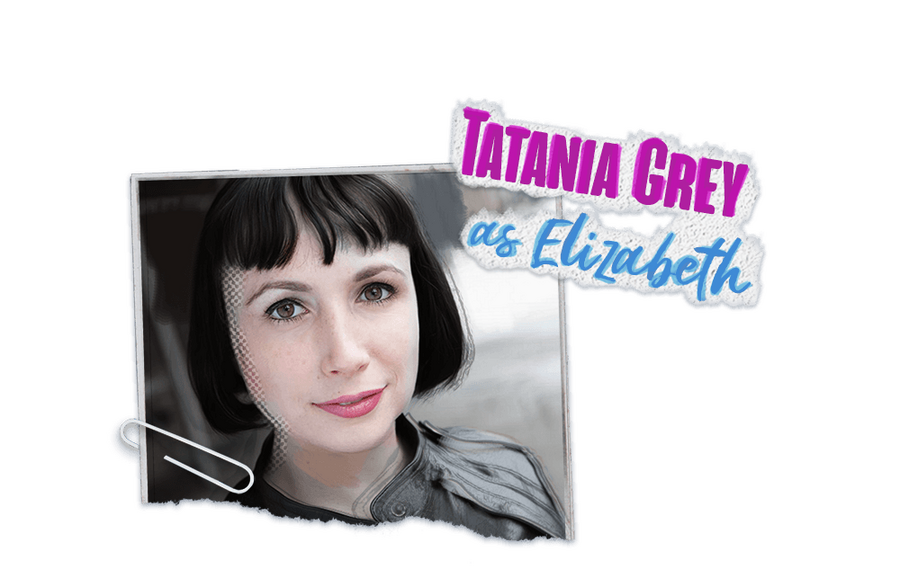
Tatania Grey went to NYU and lives in Brooklyn, New York.
Tatiana is an actress of stage, screen, and audio. Her work in The Night of Nosferatu garnered her a New York Innovative Theatre Award Best Featured Actress nomination.
You can hear her in such fiction podcasts as Pseudopod, Podcastle, and Cast of Wonders.
Find more of Tatania’s work
on her website >>

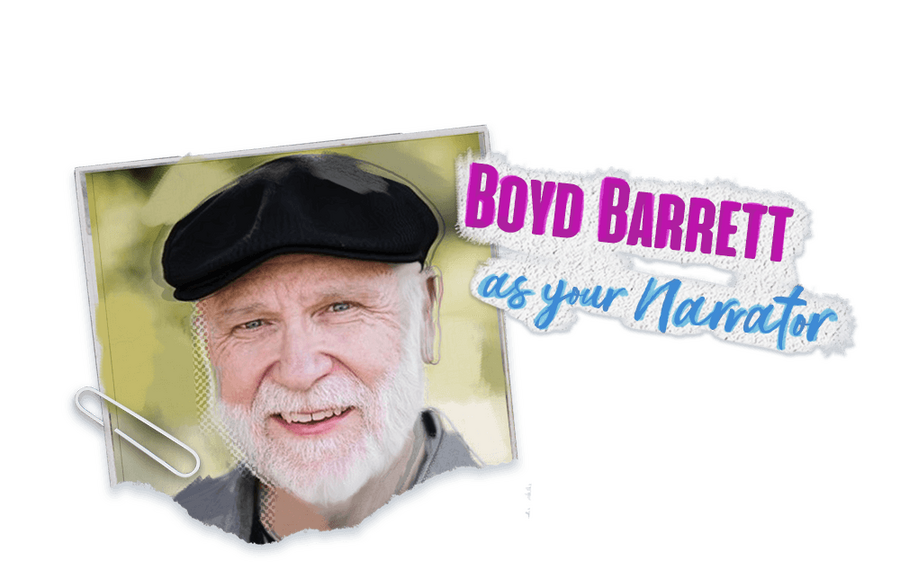
Boyd Barrett is a real estate appraiser living in Roswell, NM.
Boyd has decades of experience on stage, including traveling nationwide during the 1970s with a theatre group, and thousands of performances of his one-man shows.
He is the creator and producer of the audio drama Come And See.
Find more of Boyd’s work
on his website >>
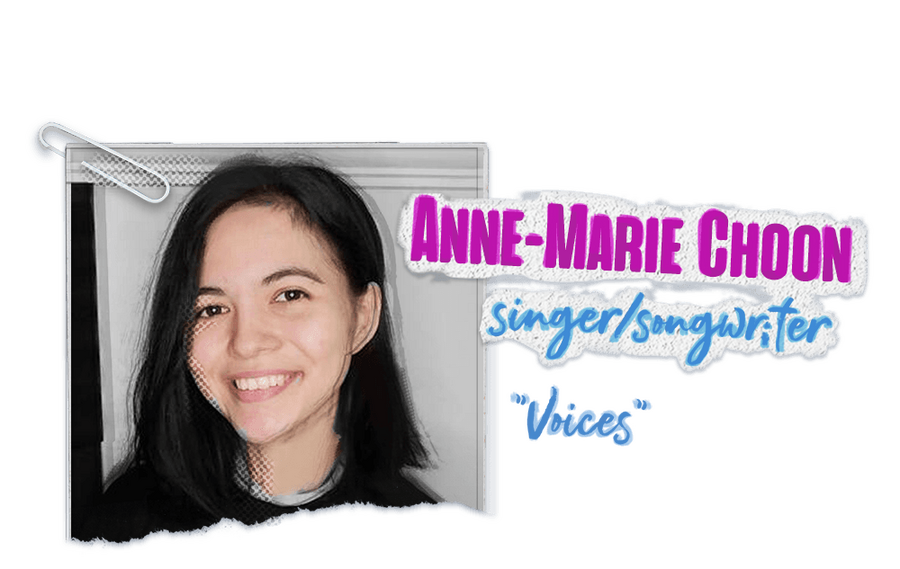
Anne-Marie Choon is a Malaysian voice actor, singer, and streamer.
Anne-Marie has a passion for using her voice to bring life to characters and stories.
She’s most interested in providing voice work for animation, video games, and audio dramas. You can hear her original songs and covers
on her YouTube Channel.
Find more of Anne-Marie’s work
on her website >>
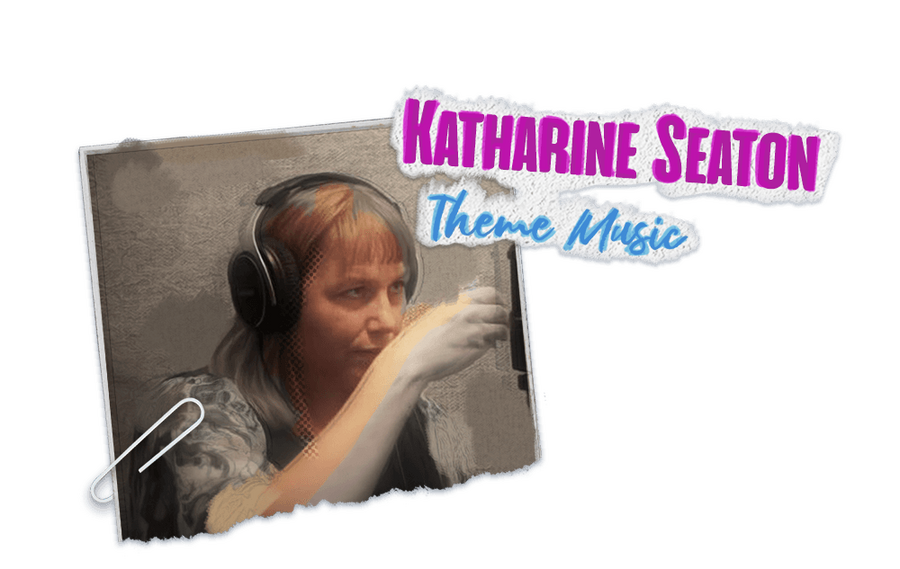
Katharine Seaton holds a BA in music and an MSc in music and sound for film and games.
Katharine is a composer and sound designer working in film and audio drama.
You can hear her work in the urban fantasy podcast The Hidden People, as well as with Inscape Animations, a film group addressing global issues such as war, migration, and climate change.
Find more of Katharine’s work
on her website >>
William J. Meyer is a writer originally from Wisconsin now living in Los Angeles, California.
He writes Fantasy, Science Fiction, Macabre. Scripted and prose.
William’s independent audio drama and fiction has been chosen as a Platinum Selection of the HEAR Now Festival, A Showcase Selection of the PodTales Festival, Co-Winner of the Audio Verse Awards’ Writing of a New Spoken Word Production, Geekie Awards Best Narrative Audio Series, and awarded Best Speculative Fiction Story (Long Form) from the Parsec Awards.
Find more of William’s work
on his website >>
© William J. Meyer

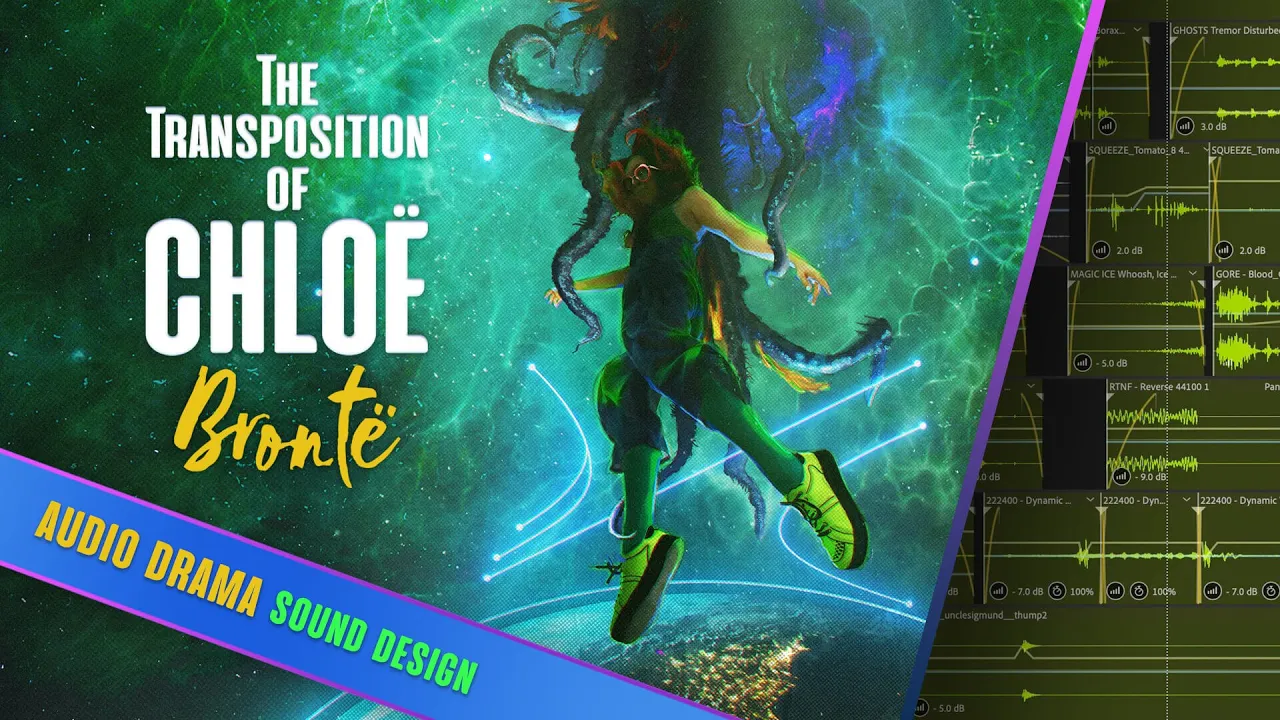
Audio Drama Sound Design
In this behind-the-scenes video, writer and producer William J. Meyer explores the sound design of the opening scene of
The Transposition of Chloë Brontë
Episode Three: Nightmare.
Learn how tomatoes and borax can lead to inter-dimensional travel.
Watch above or on YouTube >>

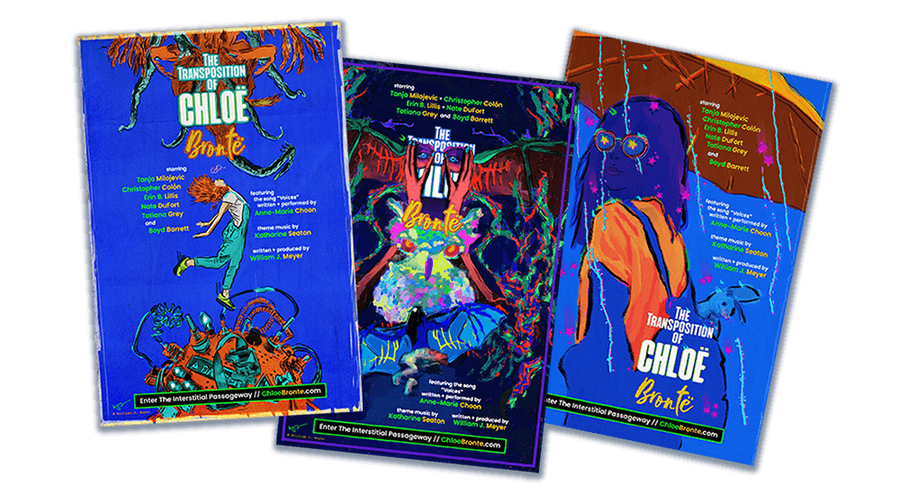
Chloë Posters
William made these three posters.
Ascension, Nightmare, Umbrella.
Download hi-res versions from
his Storytelling Patreon >>


The Transposition of Chloë Brontë
Annotation Guide
A pdf collecting all Episode Annotations is included with a free sign-up on William’s Storytelling Patreon >>
© William J. Meyer

BBC Podcast Radio Hour
Hosts Chris Pearson and Ella Watts recommend Sci-Fi Audio Drama including
The Transposition of Chloë Brontë.
Watts calls the show, “...an inventive and fun story.” While Pearson says, “This is such a lovely listen and... the relationship between Chloë and Max is written so, so well...
you feel like you know them...
a classic, romantic story...”
Listen on Apple Podcasts >>

The First Episode Of
W. Keith Tims interviews writer/producer William J. Meyer about his experience with sleep paralysis, themes of disconnection,
the tension of unreliable narration,
the importance of curiosity, and putting
“the weird thing” into a story.
Tims says, “Sometimes funny, sometimes intense... Chloë herself is a kind of hero for those who feel like they don't belong...”
Listen on Apple Podcasts >>

PressKit
Our PressKit (~38 MB) includes:
• episode guide w/ cast + crew bios (pdf)
• annotation guide (pdf)
• audio trailer (mp3)
• podcast art (jpg)
• posters (jpg)
© William J. Meyer